
Small holes, dents, nail pops and cracks can be patched. Drywall that is soft, sagging, crumbling or moldy after a leak should be cut out and replaced. Either way, the repair has to be finished to match the wall's texture and then painted, or it will still show. We repair walls and ceilings around Lexington.
We have 100+ five-star Google reviews from local homeowners, and I am personally on site for every project. Get a free estimate or call 859-475-6976.
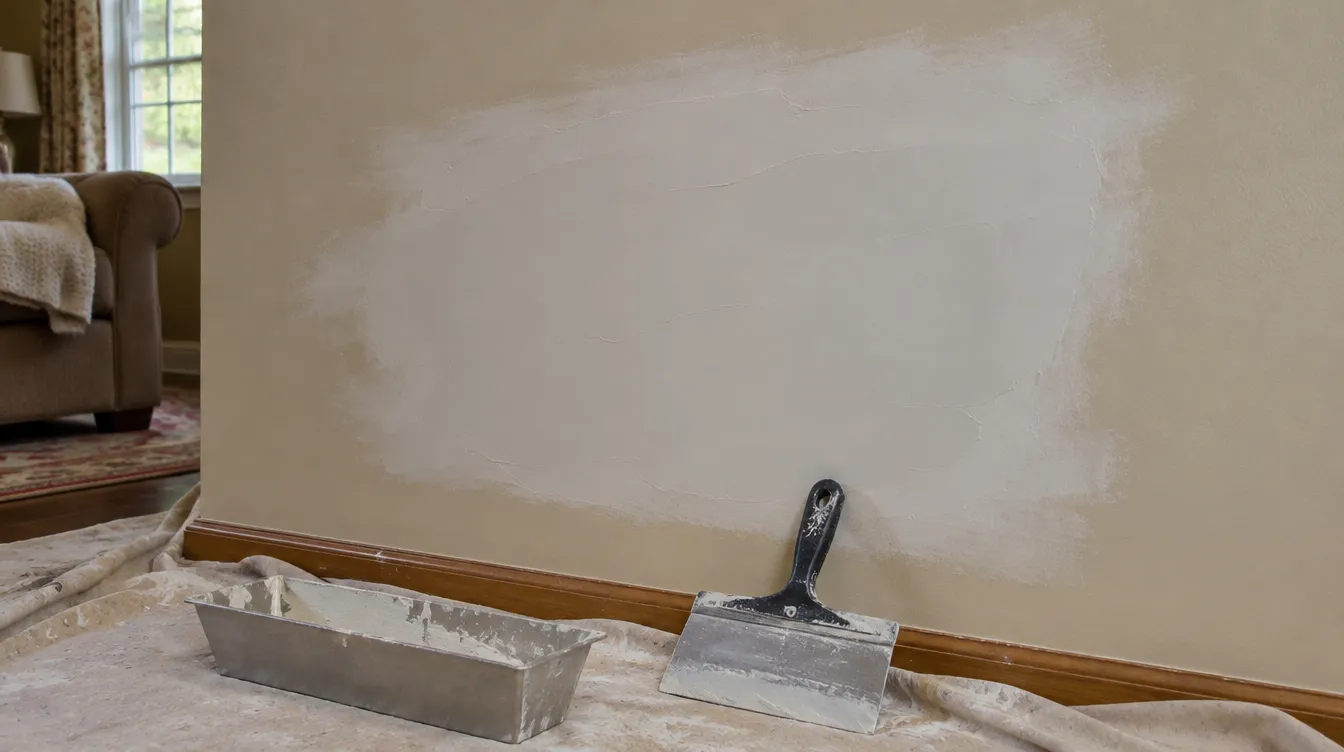
When can drywall be patched?
Most everyday drywall damage is a patch, not a replacement. Our handyman service patches these all the time:
- Doorknob holes and dents from furniture
- Nail pops, where a fastener pushes out a small round bump
- Holes left by old anchors, TV mounts and shelves
- Hairline cracks at corners, seams and above doors and windows
- Gouges from moving day
Small holes get filled with joint compound. Larger ones get a backed patch or a new piece of drywall screwed into place, then taped and finished like the rest of the wall.
When does drywall need to be replaced?
Drywall needs to come out when the board itself has failed. The usual signs are:
- It feels soft or crumbles when you press on it
- A ceiling is sagging between the joists
- There is mold on the surface or behind it
- The paper face has peeled away over a wide area
Water is the most common cause. Before any drywall goes back up, the leak has to be fixed and the area has to dry out. A plumbing leak needs a plumber, and a roof leak needs a roof repair. Otherwise the new drywall will fail the same way. We cut out the damaged section back to solid framing and replace only what is needed.
Why do some drywall repairs still show?
Most visible patches are a finishing problem, not a patching problem. Three things make the difference:
- Feathering. Each coat of compound is spread wider and thinner than the last, so there is no ridge at the edge.
- Texture. Many Central Kentucky homes have orange peel or knockdown texture on walls or ceilings. A smooth patch on a textured wall stands out, so the texture has to be matched.
- Paint. Fresh compound soaks up paint differently. It needs primer first, and touch-up paint on an older wall often shows, so we usually paint the wall from corner to corner.
How long does drywall repair take?
The hands-on work is usually short. The waiting is what takes time. Joint compound goes on in coats, and each coat has to dry before the next one, then sanding, primer and paint. A small patch can often be finished in one day. Larger repairs and ceilings usually take a second visit to finish once the compound has dried.
Humidity matters too. Compound dries more slowly in damp weather and in cool basements.
Should you repair drywall yourself?
Nail holes and small dings are a fine weekend job with a tub of lightweight spackle. It is worth calling a pro when:
- The damage is on a ceiling
- The hole is bigger than your hand
- The wall or ceiling is textured
- There was water damage, or you are not sure the leak is fixed
Drywall is also a good item to add to a list of small jobs. Our guide to what a handyman does covers the other repairs that fit into the same visit.
Frequently asked questions
Can a water-stained ceiling be fixed without replacing the drywall?
Often, yes. Once the leak is fixed and the ceiling is dry, a stain on firm drywall can be sealed with a stain-blocking primer and repainted. If the drywall is soft or sagging, that section needs to be replaced.
Do you match wall and ceiling texture?
Yes. We match the existing texture so the repair blends in once it is painted.
Do I need to paint after a drywall repair?
Yes. New compound has to be primed and painted. Painting the whole wall or ceiling usually hides the repair better than touching up one spot.
How do I get a drywall repair estimate?
Send us a few photos of the damage through the estimate form, or call 859-475-6976. Our estimates are free.